
The Health Benefits of Rice: Nutrition, Types, and Why It’s a Staple Food
Rice may appear to be a simple grain, but its global impact is anything but small. For billions of people around the world, rice provides dependable nourishment and serves as the foundation of everyday meals, a role it has maintained for thousands of years across countless cultures and cuisines. Because it is affordable, adaptable to many types of dishes, and available in a variety of nutritionally distinct forms, incorporating rice into everyday meals can be a practical way for anyone to create balanced and satisfying meals.
Understanding Different Types of Rice
Rice comes in many different varieties, and what many people don’t know is that each one offers slightly different nutritional benefits. While all rice provides carbohydrates for energy, certain varieties contain more fiber, protein, vitamins, or antioxidants than others. Some of the most common types of rice include white, brown, parboiled, purple, red, and wild rice. (Farooq & Yu, 2025)
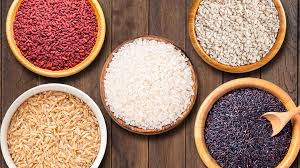 White rice is the most widely consumed variety. It is a reliable source of carbohydrates, which provide the body with energy needed for daily activity and brain function. While it contains less fiber than whole-grain varieties, white rice digests faster to provide quick energy and remains a versatile staple that pairs easily with many different foods.
Brown rice is considered a whole grain and contains more fiber than white rice, which can help support digestion and promote a feeling of fullness. It also provides additional nutrients such as magnesium and B vitamins, making it a slightly more nutrient-dense option.
Parboiled rice offers a balance between white and whole-grain rice in terms of nutrition. Because of the way it is processed, it retains more vitamins and minerals than regular white rice while still maintaining a lighter texture.
Purple rice and red rice are often valued for their higher levels of naturally occurring plant compounds called antioxidants. These antioxidants, which give the grains their deep color, may help support overall health by protecting the body’s cells from damage. These varieties also tend to contain slightly more fiber and micronutrients than refined rice.
Wild rice stands out nutritionally because it generally contains more protein and fiber than most other rice varieties. It also provides minerals such as magnesium, phosphorus, and zinc, making it one of the more nutrient-dense options among commonly consumed rice varieties.
Common Varieties of White Rice
In addition to nutritional differences, rice varieties also differ in texture, flavor, and how they are used in cooking. Long grain, medium grain, basmati, jasmine, and arborio rice are some of the most commonly used types, each offering unique characteristics.
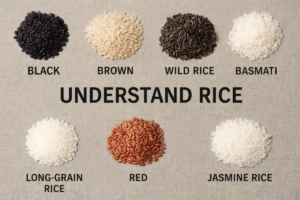 Long-grain white rice has a light, fluffy texture when cooked, with grains that remain separate. It is commonly used in dishes where a drier texture is preferred, such as stir-fries or grain bowls.
Medium-grain white rice is slightly shorter and tends to be more tender and moist. It holds together more than long-grain rice, making it a good option for dishes that require a softer consistency.
Basmati rice is a type of long-grain rice known for its distinct aroma and slightly nutty flavor. It cooks into long, separate grains and is often used in dishes such as pilafs and curries.
Jasmine rice is another aromatic variety, typically softer and slightly stickier than basmati. It has a subtle floral aroma and is commonly used in a variety of Asian-inspired dishes.
Arborio rice is a short-grain variety known for its higher starch content. When cooked, it becomes creamy while still maintaining a firm center, making it ideal for dishes like risotto. (USA Rice, n.d.) , (Serious Eats, 2019)
Rice Production in the United States
Rice is not only a global staple but also an important agricultural crop within the United States. While it is consumed nationwide, nearly all U.S. rice production is concentrated in just a few states where the climate and growing conditions are ideal. In fact, the majority of rice grown in the United States comes from six states: Arkansas, California, Louisiana, Mississippi, Missouri, and Texas. (Abadam, 2025)

Among these, Arkansas stands out as the leading rice producer, accounting for more than 40 percent of the nation’s total rice production. The state’s climate, water access, and fertile soil make it especially well-suited for growing rice. And although rice is grown in only a handful of states, its impact is felt nationwide. U.S. farmers produce billions of pounds of rice each year, helping supply both domestic consumption and global markets while supporting local economies and agricultural communities.
Easily Digestible Energy
One of the reasons rice has remained such an important staple food is its ability to provide reliable energy in a form that is both accessible and easy for the body to process. Rice is rich in carbohydrates, which serve as the body’s primary source of energy. During digestion, these carbohydrates are broken down into glucose, providing energy that supports everyday functions such as physical movement, brain activity, and overall metabolism.
One of rice’s unique advantages is that it is easy to digest, making it suitable for people of many ages and dietary needs. Its simple starch structure and low fat content allow the body to process it efficiently, and because of this, rice is often recommended in situations where gentle, easily digestible foods are needed, such as for individuals recovering from illness or experiencing digestive sensitivity. (Kowsalya et al., 2022)
In addition to its digestibility, rice can provide either quick or more sustained energy depending on the variety. White rice is digested more rapidly, offering faster energy, while whole-grain varieties like brown rice contain additional fiber that slows digestion and supports steadier energy release. This flexibility allows rice to meet different dietary needs while continuing to serve as a dependable foundation for balanced meals.
Nutritional Value and Accessibility
While rice is often associated with carbohydrates, its value goes beyond simply providing energy. It serves as a foundational ingredient that helps support balanced meals, pairing easily with proteins, vegetables, and legumes to create a more complete nutritional profile. In this way, rice plays an important role not just on its own, but in how it contributes to overall diet quality.
Another key benefit of rice is that it is naturally gluten-free, making it a widely accessible grain for a variety of dietary needs. Gluten, a protein found in grains such as wheat, barley, and rye, can cause adverse reactions for some individuals, particularly those with conditions such as Celiac Disease or gluten sensitivity. Because rice does not contain gluten, it provides a safe and reliable option that can be incorporated into many different types of meals without restriction. (Park & Kim, 2023)
Additionally, while rice does not provide a complete protein on its own, it works exceptionally well when combined with foods like beans to form a complementary protein that contains all essential amino acids. This pairing has been used in traditional diets as well as vegetarian diets for generations and offers a practical, affordable way to build more nutritionally complete meals.
A Grain That Continues to Nourish
Rice’s combination of accessibility, versatility, and nutritional value has allowed it to remain a foundational food for generations. Whether used as the base of a simple meal or incorporated into more complex dishes, rice continues to provide dependable nourishment around the world.
By understanding the differences among rice varieties and the benefits they offer, individuals can make informed choices that support both balanced nutrition and practical meal preparation.
Sources
Abadam, V. (2025, December 23). Rice sector at a glance. Economic Research Service. https://www.ers.usda.gov/topics/crops/rice/rice-sector-at-a-glance
Farooq, M. A., & Yu, J. (2025). Starches in rice: Effects of rice variety and processing/cooking methods on their glycemic index. Foods, 14(12), Article 2022. https://doi.org/10.3390/foods14122022
Kowsalya, P., Sharanyakanth, P. S., & Mahendran, R. (2022). Traditional rice varieties: A comprehensive review on its nutritional, medicinal, therapeutic and health benefit potential. Journal of Food Composition and Analysis, 114, Article 104742. https://doi.org/10.1016/j.jfca.2022.104742
Park, J., & Kim, H.-S. (2023). Rice-based gluten-free foods and technologies: A review. Foods, 12(22), Article 4110. https://doi.org/10.3390/foods12224110
Serious Eats. (2019, October 24). A comprehensive guide to rice varieties. https://www.seriouseats.com/guide-to-rice
USA Rice. (n.d.). U.S. rice varieties. https://www.usarice.com/thinkrice/discover-us-rice/us-rice-varieties